
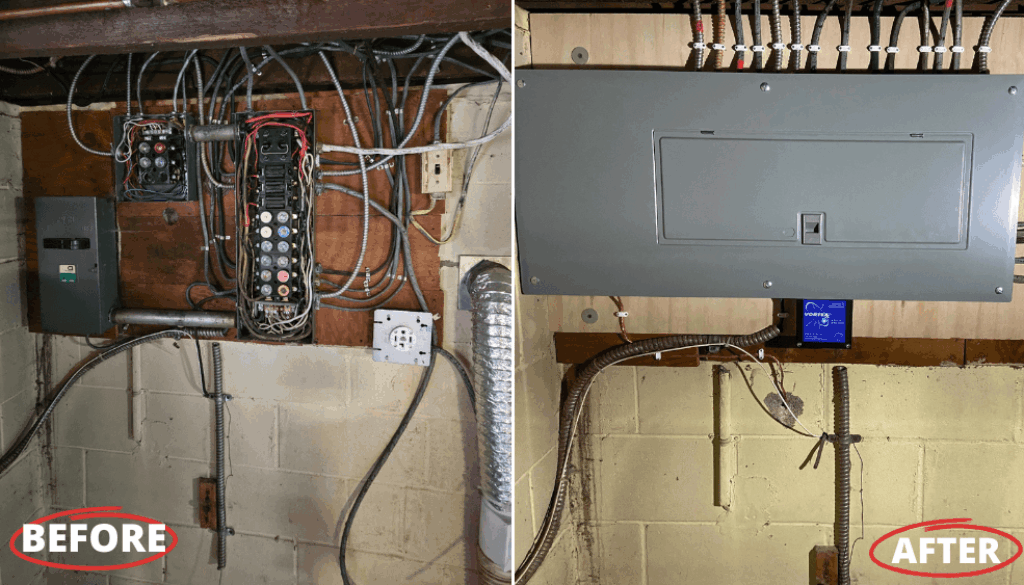
Service Size: It Matters More Than You Think
As a homeowner, this is a number that you should know.
Your electrical service size is the total amount of power your home can safely utilize from the utility. It’s measured in amps (A), and the most common residential sizes are:
- 60 amp – Very old homes, usually inadequate today
- 100 amp – Older standard, may not meet today’s needs
- 200 amp – Current standard for most homes
- 300–400 amp – Large homes, electric heating, EVs, or workshops
If your service is too small for your lifestyle, you’re not just dealing with inconvenience—you’re increasing the risk of overheating, nuisance tripping, and even fire.
You Can’t Just “Add Stuff” Without Doing the Math
Every major appliance adds to your electrical load.
High-demand items include:
- Electric ranges and ovens
- Heat pumps and air conditioners
- Hot tubs, pools and saunas
- EV chargers
- Electric water heaters
- Baseboard or in-floor heating
The problem?
Many older homes were built when the biggest electrical load was a toaster, a TV and a stove.
What Is Load Calculation?
A load calculation is how electricians determine whether your electrical service can safely handle everything in your home.
It considers:
- Square footage
- General lighting load
- Fixed appliances
- Heating and cooling systems
- Specialty loads (EVs, hot tubs, welders, etc.)
This isn’t guesswork – it’s a formula defined by the electrical code.
For Example:
Let’s say a home has:
- 100A service
- Electric stove
- Heat pump
- EV charger
- Hot tub
On paper, everything “works”…but during peak use (winter evening, cooking, heating, charging car), the system could be overloaded.
Results:
- Breakers trip
- Lights dim
- Main breaker runs hot
- Long-term damage to wiring and connections
This is one of the most common reasons service upgrades are required.
Why Service Upgrades Are So Common Now
Service upgrades are no longer luxury projects—they’re often necessary just to keep up with everyday needs
Common triggers:
- Adding an EV charger
- Switching from gas to electric heating
- Renovating kitchens
- Installing a suite or rental unit
- Adding a hot tub or workshop
In many cases, the panel itself is fine—but the incoming service is undersized.
Warning Signs Your Service Is Too Small
- Main breaker trips
- Lights dim when appliances start
- You can’t add new circuits
- Panel is completely full
- Electrician says “we’re out of capacity”
These are not annoyances – they’re capacity limits.
The Big Homeowner Mistake
The biggest mistake homeowners make is assuming:
“If the breaker isn’t tripping, everything must be fine.”
In reality:
- You can be operating close to dangerous limits for years.
- Heat buildup happens silently.
- Problems show up only when something finally fails.
Bottom Line: Size It for Tomorrow, Not Yesterday
Your electrical system should be sized for:
- How you live now
- How you’ll live in 5–10 years
Not how the house was used in 1985
A proper load calculation and service review is one of the smartest (and safest) investments a homeowner can make—especially before renovations or major upgrades.
Because when it comes to electricity, capacity is safety.
Nu-Tek Electric has enjoyed 38 years of serving local homeowners with all their electrical needs and have great problem solving skills!
If you have any questions about the information above, give us a call at 705-458-1083 or email us info@nu-tekelectric.ca
We’ll Light Up Your Smile!


